
Wildfire Mitigation in Pitkin County: Why It Matters Now More Than Ever
Wildfire mitigation in Pitkin County is critical for protecting lives, homes, and the natural landscapes that define this part of Colorado. With changing climate conditions, extended drought periods, and historically low snowpack — especially evident during the 2025 ski season — the risk of severe wildfires has grown significantly. Proactive mitigation can reduce fuel loads, safeguard watersheds, and improve community resilience.
The Growing Threat in Pitkin County
Pitkin County’s forests and wildlands are beautiful — but they are also fire-prone. Over the past decade, longer dry seasons and warmer temperatures have increased the likelihood of uncharacteristically large and fast-moving wildfires. The winter of 2024–2025 produced notably low snowpack, reducing natural moisture that typically helps slow the spread of fire in spring and summer. When snow melts early and precipitation remains scarce, vegetation dries out earlier and stays dry longer, creating ideal conditions for wildfire ignition and spread.
Red Mountain, Aspen: A Clear Example
Red Mountain, near Aspen, illustrates why mitigation is so important. This area has steep slopes, dense forests, and heavy recreational use — all factors that heighten wildfire risk. In recent years, Red Mountain’s lower elevation zones have shown increased stress from drought and beetle kill, adding to the dead fuel on the ground. Without mitigation, these conditions can turn a single lightning strike or human ignition into a large, destructive fire.
Local efforts on and around Red Mountain — such as fuel reduction projects, defensible space maintenance near properties, and strategic vegetation thinning — have provided real-world lessons. Where mitigation has been implemented, wildfire intensity and spread have been reduced, giving firefighters better opportunities to contain outbreaks and protecting nearby communities.
What Wildfire Mitigation Involves
Effective wildfire mitigation in Pitkin County includes:
Creating defensible space around homes and structures
Reducing fuel loads through thinning and prescribed burns
Maintaining access routes for emergency response
Educating residents and visitors on fire safety
Collaborating with federal, state, and local agencies on landscape-scale projects
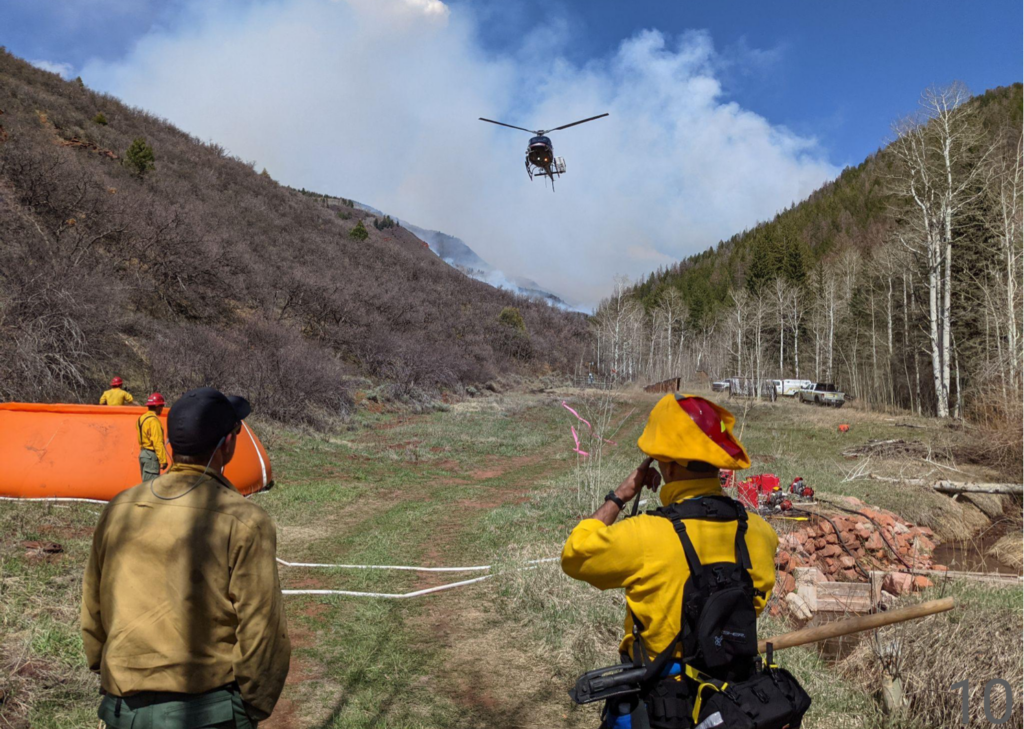
The Economic and Environmental Case
Wildfire damage is expensive. Beyond immediate firefighting costs, smoke impacts public health, tourism, and local businesses. In Pitkin County — where outdoor recreation drives a large part of the economy — protecting forests and trails from catastrophic fires preserves the quality of life and economic stability.
Environmentally, mitigation helps protect watersheds that supply drinking water, guards wildlife habitat, and reduces carbon released during uncontrolled wildfires.
Take Action Now
Low snow years like 2025 underscore the need for proactive mitigation. Residents, property owners, and visitors can all contribute by:
Clearing brush and dead vegetation around properties
Have wildfire hazard risk assessment completed.
Supporting community mitigation programs
Wildfire mitigation isn’t a one-time effort — it’s ongoing stewardship. In Pitkin County, acting now helps ensure safer forests, healthier communities, and more resilient landscapes for generations to come.
(c) 2022-2026 Aspen Home Improvement LLC. All Rights Reserved.